ServicesCommercial Junk Removal
Commercial Junk Removal in Rosemont
We clear offices, storefronts, restaurants and small warehouses of old desks, dead printers, broken shelving, pallets and the back-room pile nobody has time for. We load it, sort what can be recycled or donated, and leave the space swept. Your estimate is free and given on site.
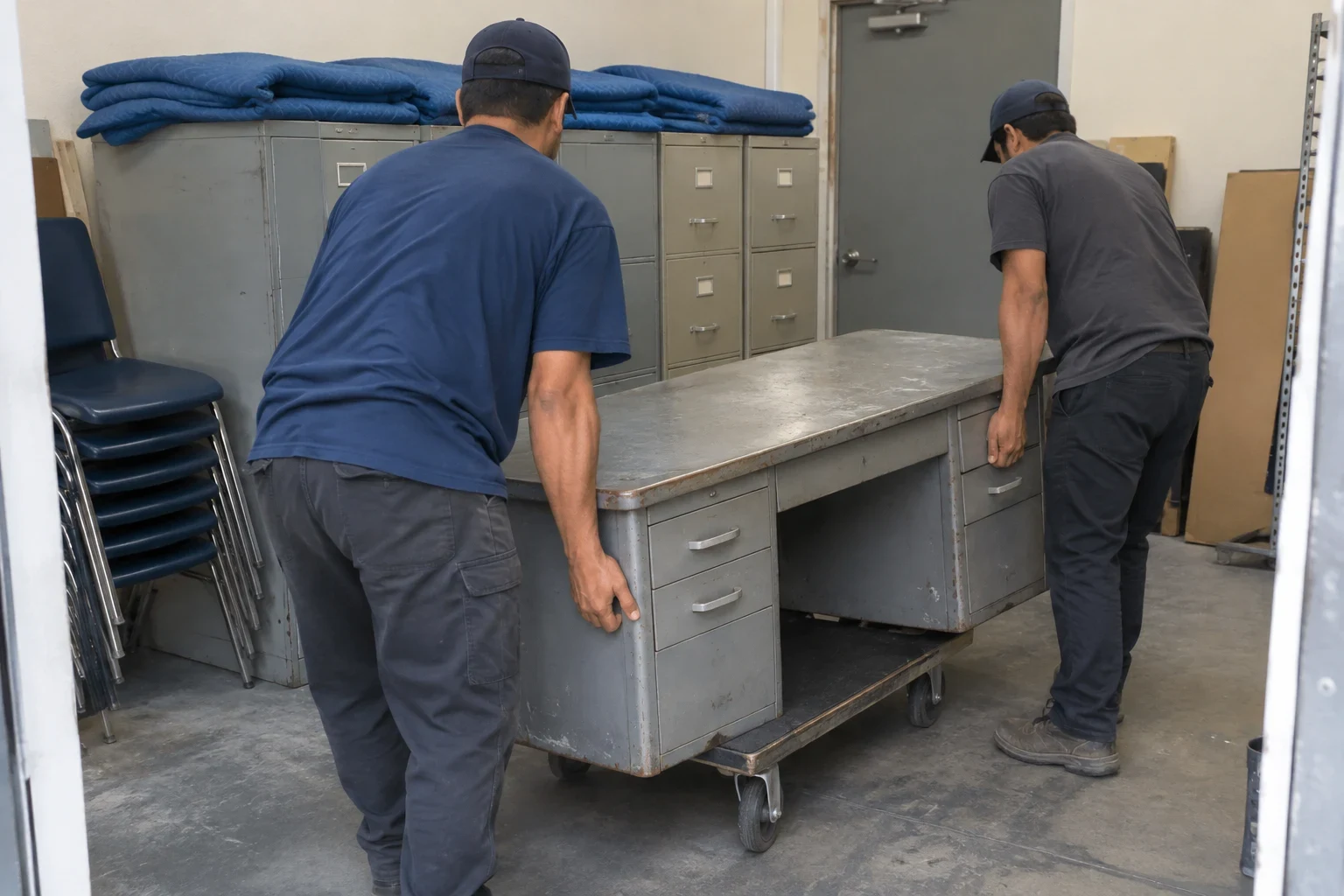
Clearing out space your business is paying for
Commercial junk removal is the work of getting bulky, mixed waste out of a working business: retired equipment, fixtures from a remodel, file boxes, packing waste and broken chairs. It is the right call when the pile is too big for your dumpster, includes items your waste hauler won't pick up, or has to be gone before a lease turnover or inspection.
Clutter costs more than floor space. Boxes stacked against a return-air grille starve the HVAC unit of airflow, so it runs longer to hold the same temperature, and a hot Sacramento-area summer makes that extra runtime show up on the utility bill. A spare break-room fridge or old chest freezer that stays plugged in keeps cycling its compressor to chill food nobody eats. Getting those things out is one of the cheaper ways to trim a running cost.
We handle the lifting, the stairs and the disposal. You point at what goes and what stays.
What we haul from businesses
- Office cleanouts
- Desks, filing cabinets, cubicle panels, broken task chairs and whiteboards. We unbolt and break down panel systems so they fit through doors without scuffing frames.
- Store shelving and sales-floor fixtures
- Freestanding shelf runs, wall panel systems, glass display counters, forms and retired signs. Steel shelving is sent to a scrap recycler instead of the landfill.
- Electronics and e-waste
- Monitors, printers, copiers, desktop towers and old phone systems. California treats screens and many electronics as universal waste, so we take them to recyclers that accept them instead of tossing them in the load. Wipe or pull the hard drives before we arrive.
- Break room and kitchen appliances
- Refrigerators, ice machines, microwaves and water coolers. Units with refrigerant go to facilities set up to recover it before the metal is recycled.
- Pallets, cardboard and packing waste
- Broken pallets, shrink wrap and the stacks of flattened boxes that build up behind a stockroom. Clean cardboard is separated for recycling.
Signs it is time to clear things out
Vents and panels are blocked
Storage is piled in front of supply registers, return grilles or the electrical panel. Code calls for clear working space in front of a panel, and blocked airflow makes your HVAC work harder.
Retired equipment is still plugged in
An old copier in standby, a second fridge, a server nobody uses. Each one draws power and adds heat the air conditioning has to remove.
Aisles and exits are narrowing
Boxes creep into walkways and toward exit doors. That is a trip hazard for staff and a problem at a fire inspection.
Your lease is ending
Most leases require the space returned broom clean. Leftover fixtures and debris can come out of your deposit.
The dumpster keeps overflowing
Bulky items and appliances sit next to the bin because the regular hauler won't take them.
What sets the price
Commercial jobs are priced on what we load and the effort it takes to get it out, not on a loose hourly guess. You hear the number during the walkthrough, before anything is lifted. Upfront pricing, no surprises.
Volume
Truck space is the biggest driver. Clearing a couple of workstations and one copier is a much smaller job than emptying an entire stockroom, and the estimate reflects that.
Type of material
Refrigerant appliances, e-waste and heavy items like safes or concrete-based fixtures carry their own disposal or handling costs.
Access and distance
Upper floors without an elevator, long carries from the back of a building and tight hallways add labor time.
Disassembly
Bolted shelving, cubicle systems and wall-mounted displays need tools and time to take down before they can be loaded.
How a commercial job runs
- 1
On-site walkthrough
We walk the space with you, look at the items and the access, and give you a free estimate in writing before any work starts.
- 2
Scheduling around your business
We pick a time that keeps disruption low, such as before opening or on a slow day. Tell us about loading docks, elevator bookings or building rules so we plan for them.
- 3
Loading
Our crew takes items out by the shortest clear route, padding door frames and elevator walls where needed. Anything that must be disassembled is taken apart on site.
- 4
Sorting and sweep-up
Loads are sorted for scrap metal, e-waste, cardboard and usable donations before the rest goes to disposal. Once the floor is clear we broom it out, then go through the space together so you can confirm everything on the list is gone.
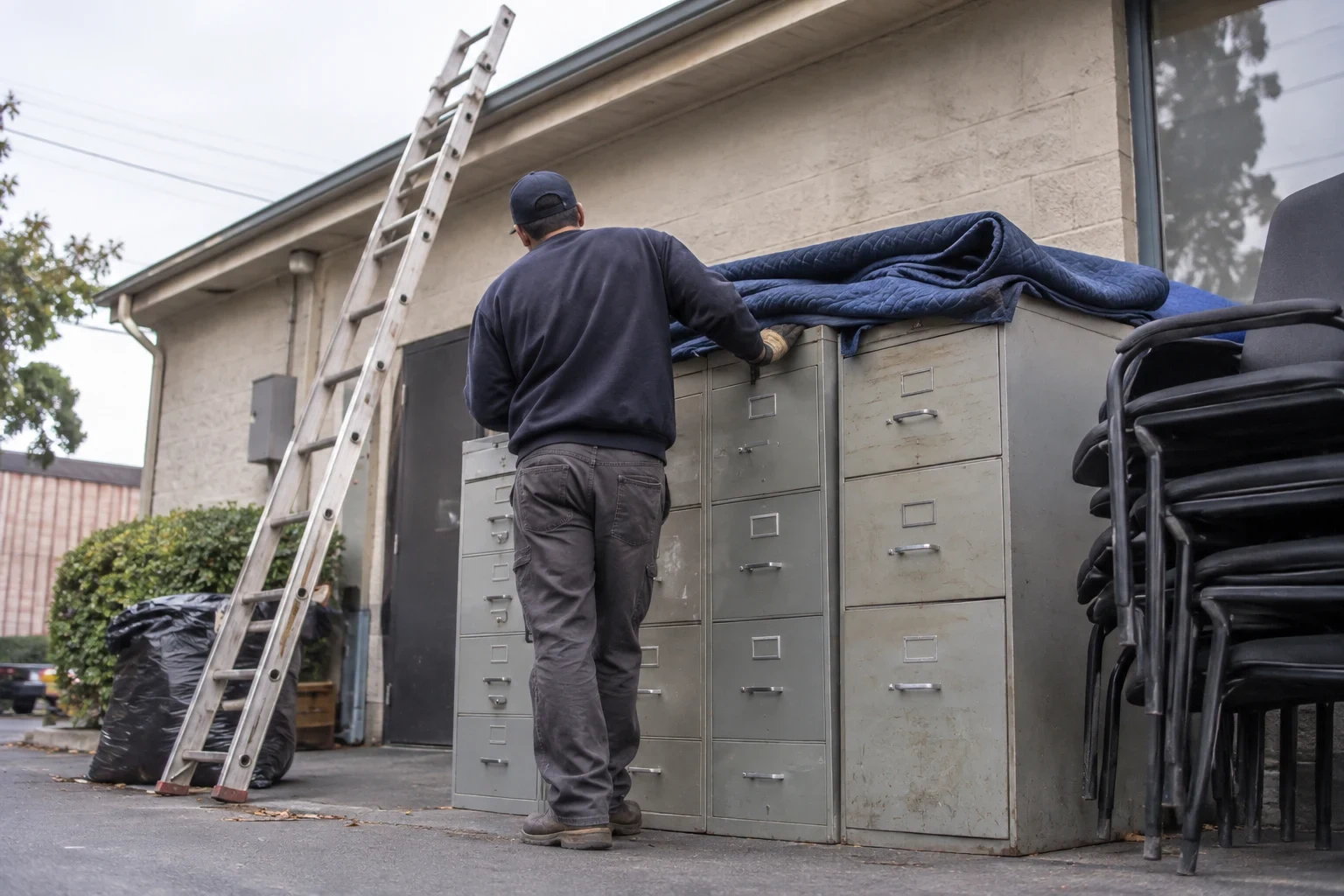
Answers for business owners
Do you schedule pickups outside our open hours?
In many cases we can. An early-morning start or a pickup after you close keeps the crew away from customers and staff. Bring it up on the phone and we will look for a time that suits your schedule.
What happens to old computers and hard drives?
Electronics go to recyclers that accept e-waste, not to the landfill. We do not wipe data, so remove or erase drives before pickup. Once that is done, we haul the hardware.
Do you take boxes of old files?
We haul boxed paper to recycling. If the files hold customer or employee records, have them shredded first, and we can take the shredded bins afterward.
Is there anything you can't take?
Hazardous materials such as solvents, fuel, partly full chemical containers and some fluorescent tubes need a hazardous waste channel. We will point those out at the walkthrough so nothing surprises you on the day.
Does usable equipment get donated?
When it is in working condition, yes. Desks, chairs and shelving in good shape are set aside for donation instead of disposal.
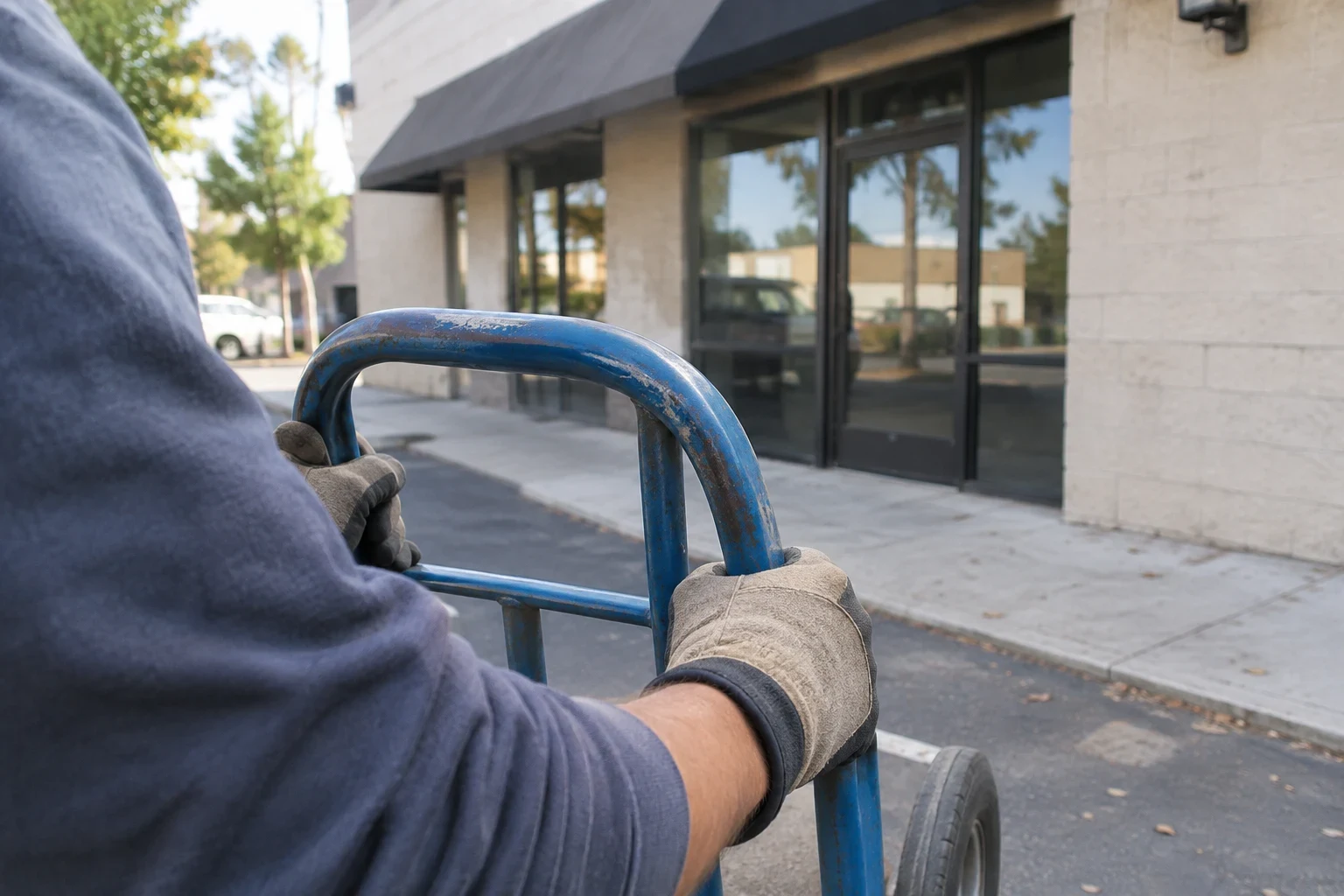
Clear the back room and the aisles
Give us a rough list of the items and where they are in the building. We will visit, look over the space and quote the job before a single box leaves.