ServicesLight Demolition
Light Demolition in Rosemont
We tear out the outdoor structures that have outlived their use: rotted decks, leaning fences, sagging patio covers, dead hot tubs. We cut them down to haulable pieces, load everything ourselves and leave the site raked and swept. You get one upfront price before any work starts.
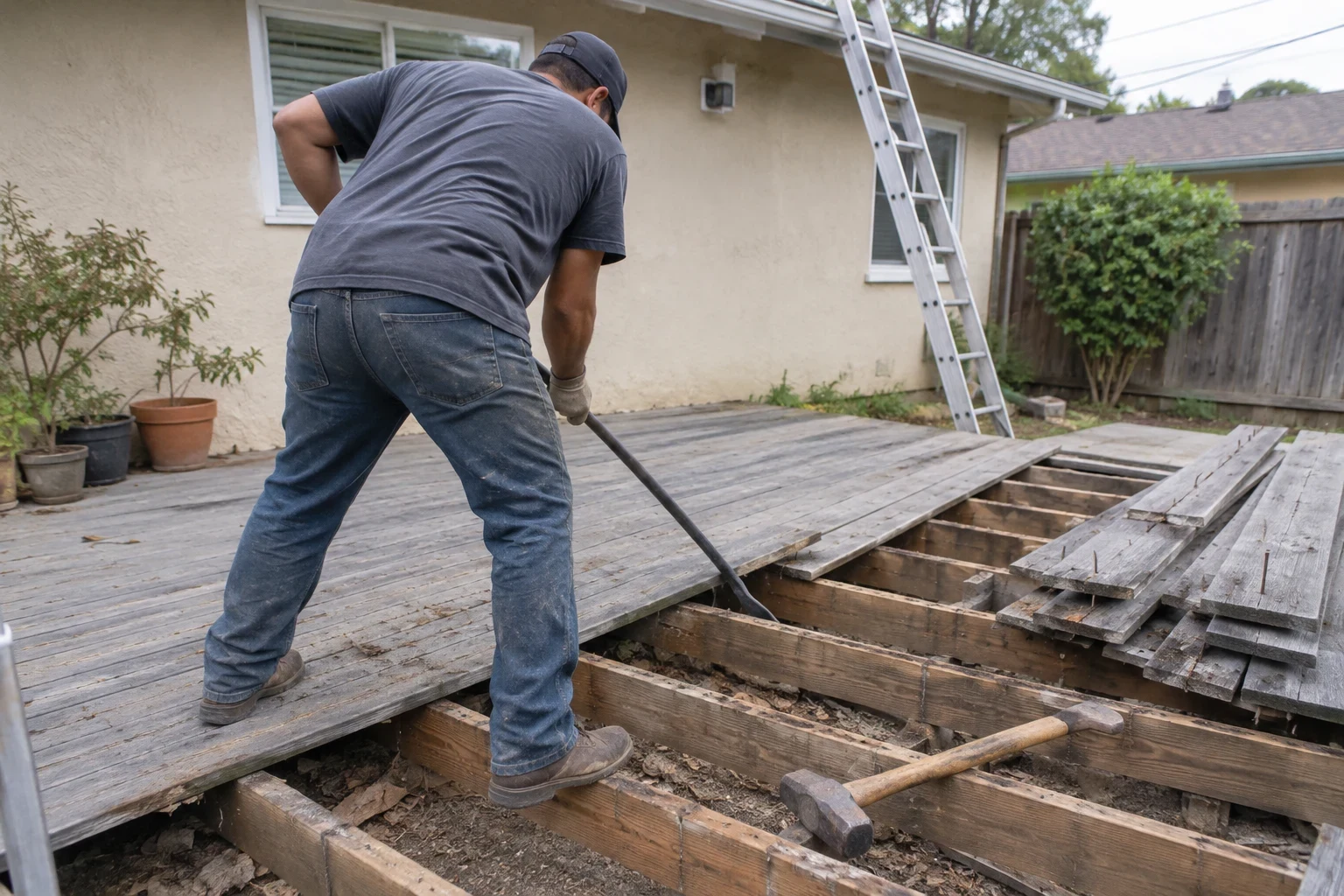
Small structures, taken down the right way
Light demolition is the middle ground between hauling junk and hiring a general contractor. The structure is still standing, so somebody has to take it apart before it can leave. That means pulling fasteners, cutting framing into lengths that fit the truck, breaking out footings when you want them gone and separating wood, metal and concrete so each goes to the right place.
We stick to non-structural work outside your home. A freestanding deck, a fence line, an aluminum patio cover, a playset or a spa is our kind of job. Anything that carries load for the house itself, or anything tied into gas or a live circuit, needs an electrician, plumber or contractor first, and we tell you that plainly at the estimate.
Some of this work pays you back after the truck leaves. A hot tub nobody uses can still run its circulation pump and heater every month. A low deck built tight against the siding holds moisture against the rim joist and sill plate, and that rot opens gaps where conditioned air leaks out. Taking it out stops both.
What a light demolition job includes
Decks and stairs
We remove decking boards, joists, beams, posts and railings. Concrete pier blocks come out too, unless you want to keep them for reuse. If the ledger board is bolted to your home, we take it off carefully and show you the condition of the siding and flashing behind it.
Fence runs and gates
We dismantle wood fencing, chain-link panels and aging wire fence, gates included. Posts can come out with their concrete footing attached, or we cut them flush with the ground when a new fence will follow the same line.
Patio covers and awnings
Aluminum lattice, wood pergolas and corrugated panel covers. We unbolt them from the fascia and leave the attachment holes exposed so they can be sealed before the winter rains.
Hot tubs and spas
After your electrician has disconnected the spa at its breaker, we drain it, cut the shell and cabinet into sections and haul off the shell, pump and heater together.
Playsets and small concrete
Wooden swing sets, trampolines, and cracked walkways or small slabs we can break by hand and carry out.
Haul-off and cleanup
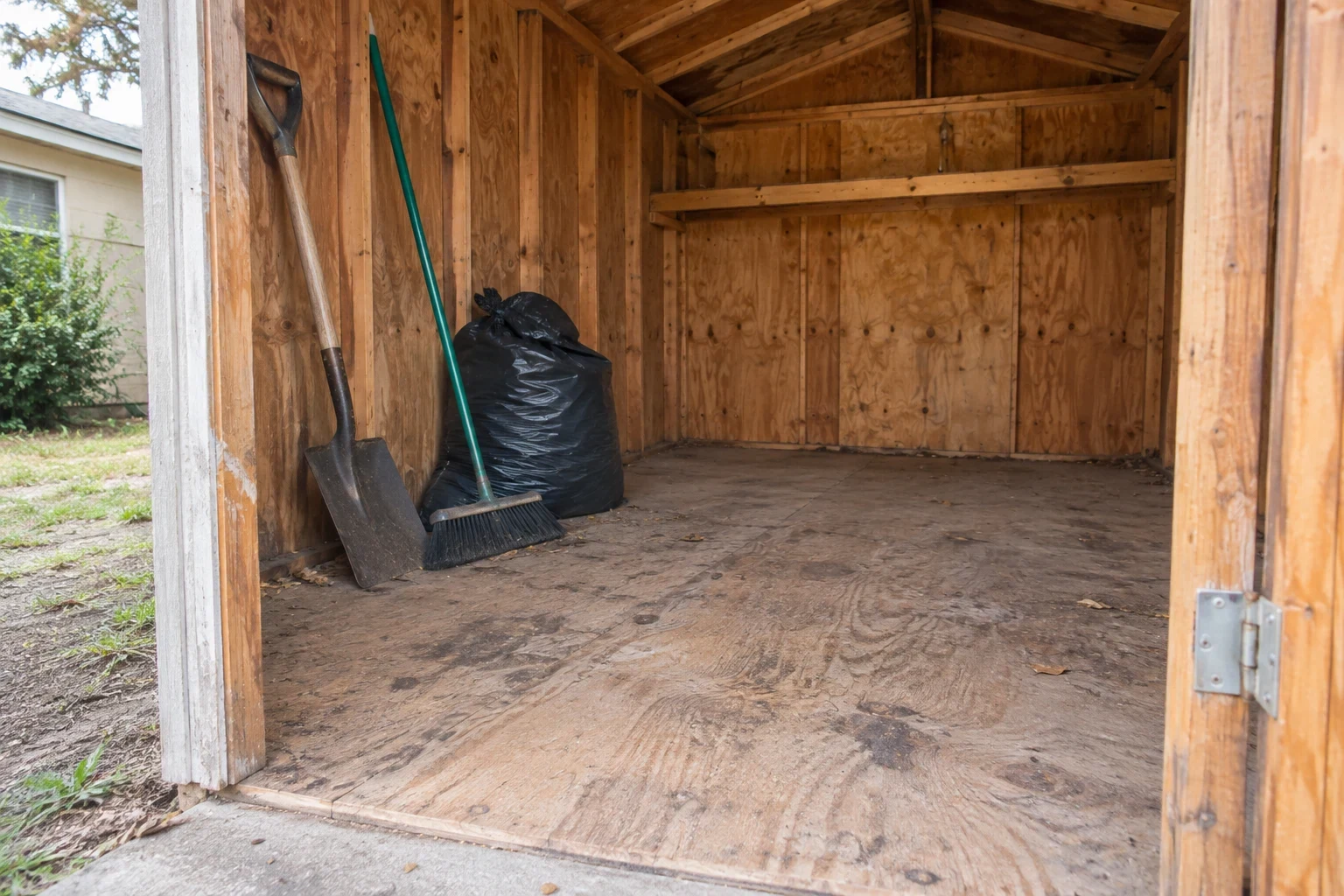
Our crew loads every piece. We rake for screws, nails and splinters and sweep the hard surfaces before we leave.
Signs a structure should come down
- Soft or spongy deck boards
- Give at the joist lines usually means the framing underneath has rotted, not just the surface. Replacing boards on bad joists only buys a season or two.
- A hot tub that sits covered
- An idle spa still pulls power to hold water temperature and run filtration. If it has not been used in a year, draining it and taking it out ends that cost.
- Fence posts leaning at the base
- Wood posts rot right at the soil line, where water collects. Once several lean the same way, the whole run is usually due.
- Stains or rot on the siding behind a deck
- Dark streaks or soft trim where a deck meets the wall show water getting trapped. Removing the deck lets you see and fix the damage before it reaches the wall cavity and insulation.
- A cover with loose or rusted fasteners
- Patio covers that rattle in wind or drip at the attachment points are pulling against your fascia. Taking them down protects the roof edge.
How the day runs
- 1
Estimate on site
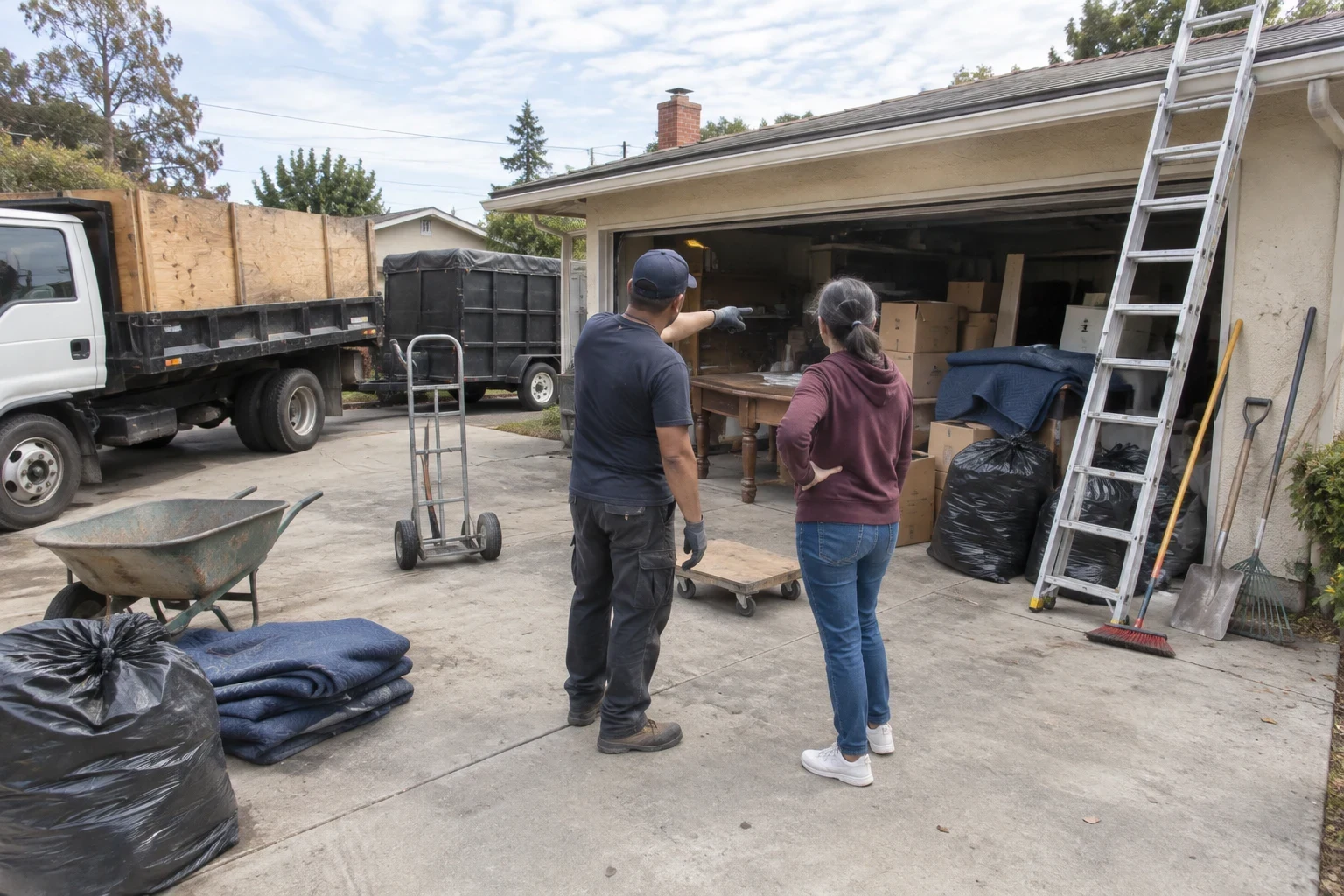
We walk the structure with you, check how it is attached and look for utilities, older painted surfaces or materials that need testing. You get an upfront price, no surprises, before we lift a tool.
- 2
Prep and protection
We confirm power and water are off where they need to be, lay down protection on walkways and plan a carry path that keeps debris off your lawn and plantings.
- 3
Take-down
We work top to bottom: railings and covers first, then decking, then framing and posts. Pieces are cut to length as they come off so the pile never sprawls across your yard.
- 4
Sorting and loading
Clean lumber, metal and concrete are kept apart so each can go to recycling or the right facility instead of all to landfill.
- 5
Final sweep
We rake the soil where the structure stood, magnet-sweep for loose fasteners and walk the area with you before we leave.
What moves the price
There is no flat demolition rate, because two decks of the same footprint can come apart very differently. The price follows the volume and weight of the material plus the effort it takes to free it and carry it to the truck. We set one price on site once we have seen the structure, and it covers labor, haul-off and cleanup.
- Size and material
- A 200-square-foot deck of pressure-treated lumber is a different load than a small cedar fence. Weight and volume decide how much truck space it fills and what the disposal fees come to.
- Footings and concrete
- Posts set in concrete take longer to extract than posts resting on pier blocks. Cutting posts off at grade is less work than digging the footings out completely.
- Access
- A narrow side yard, a slope or a backyard reached only through a gate means more hand-carrying and more time on the job.
- Materials that need special handling
- Older painted wood that may contain lead, or panels that could contain asbestos, change how the work is done. We point these out at the estimate rather than after we start.
Light demolition questions
- Can you take out an interior wall?
- Our light demolition work stays outside your home: decks, fences, covers, spas and similar structures. Walls inside the house can carry load or hide wiring and plumbing, so that job belongs with a general contractor. Once a contractor has opened things up, we can haul the debris away through our construction debris service.
- Will I have to pull a permit before you tear out my deck or patio cover?
- Plenty of small, freestanding structures come down without one, but it depends on the structure and how it attaches to the house. At the estimate we tell you if a permit seems likely and what the county typically wants to see. That gives you time to check before we put the job on the calendar.
- What do I need to do before you remove a hot tub?
- Have an electrician disconnect the spa at its breaker or disconnect box and cap the wiring. We do not cut live circuits. If you can, start draining it a day ahead; otherwise we drain it on the day, which adds a little time.
- What if the paint on my old deck or fence has lead in it?
- Homes built before 1978 may have lead-based paint on older wood. If we suspect it, we tell you before work starts and recommend a quick test. Bare or stained lumber, which covers most decks, is not a concern.
- How long does a typical job take?
- A fence run or a small deck is often finished in a few hours. A large deck with footings, or a spa in a tight backyard, can take most of a day. We give you a realistic time window along with the estimate.
Ready to clear that old structure out?
Tell us what is standing and where. We will come look at it, explain how it comes down and give you a free, no-obligation estimate with one upfront price.