ServicesShed Removal
Shed Removal in Rosemont
We take apart old wood, metal and resin sheds, load out everything inside them, and haul the whole lot away. You get a clear patch of yard, no loose nails in the grass, and a firm price before any panel comes off.
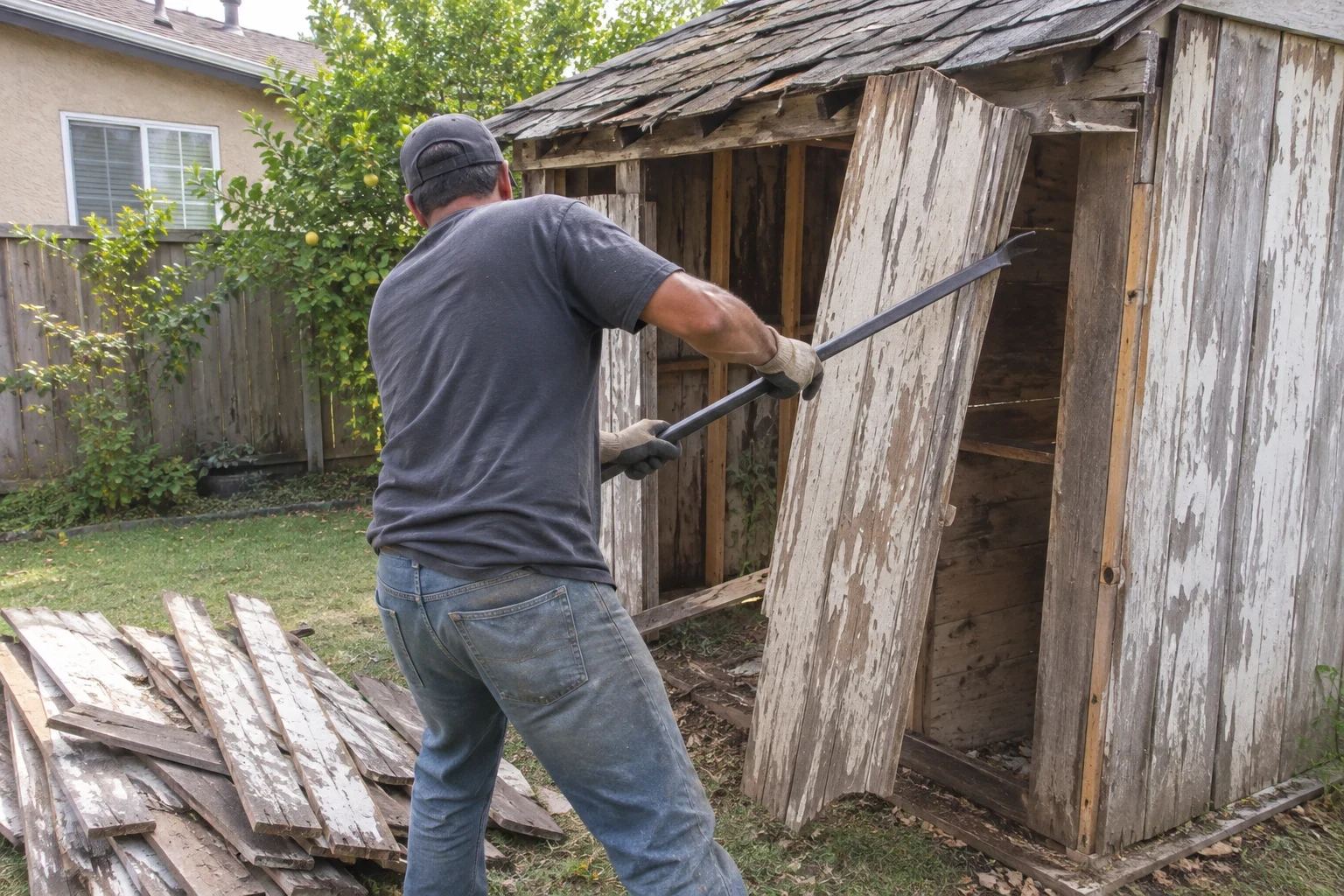
When taking the shed down makes more sense than fixing it
Most sheds we remove have failed from the bottom up. Wood floor joists sitting on pier blocks or bare soil soak up winter rain, the plywood floor goes soft, and the walls start to rack out of square so the doors no longer close. Metal sheds rust along the base rail where water pools, and the thin galvanized panels tear at the screw holes. Resin kits get brittle after years of summer sun and crack at the roof seams.
Once the frame is gone, new shingles or a fresh coat of paint will not save it. We look at it with you, tell you plainly whether it is worth keeping, and if it is not, we take it down and haul it out in one visit.
There is a practical side for your home, too. A shed built tight against the house or next to the AC condenser can block airflow, and a condenser that cannot breathe works harder through the hot months. An old second fridge or freezer running in a hot shed adds to the power bill every month. Clearing both out can help on running costs, not just looks.
The work included in a shed removal
Clearing out what's stored inside
Rakes, old mowers, bikes, boxes, scrap lumber and dead appliances all come out first. Point out anything you are keeping and we set it down wherever you want it.
Dismantling roof to floor
Shingles and sheathing come off before the rafters, then the wall panels and studs, and last the floor deck with its skids or joists. Working in that order means no wall drops on its own.
Steel and resin kits
Metal sheds are unbolted panel by panel and stacked flat for scrap. Plastic and vinyl kits separate at their seam clips or screws and leave in big pieces.
Same-day haul-away
Every piece goes on our truck before we leave. Metal is sorted out for recycling when it is clean enough, and the remainder goes to a disposal facility that takes it.
Raking and a magnet pass
Splinters and shingle grit get raked up, then a rolling magnet goes over the footprint and the carry path. That catches the stray nails and screws that would otherwise turn up under a mower or a bare foot.
How to tell an old shed has reached the end
- Soft spots in the deck
- If the floor flexes or sags when you step inside, the plywood and the joists under it are likely rotting. That decay keeps moving through the wood, and replacing a base in that shape seldom makes financial sense.
- Doors that drag or won't latch
- When the latch stops lining up, the walls have pushed out of square. That almost always traces back to a base that has sunk or decayed.
- Rust holes along the bottom
- Perforated steel at the base rail lets in rainwater and rodents. Once the metal is eaten through, the panels have lost most of their stiffness.
- Pests and a damp smell
- Mouse nests, mud tubes from termites, wasps or a musty odor mean the building is soaking up moisture and housing pests right beside your home.
- It crowds the house or the AC unit
- A shed pressed up against the condenser or the house wall holds heat and chokes airflow. Moving that storage elsewhere lets the unit breathe and run as designed.
How a shed removal day runs
- 1
On-site estimate
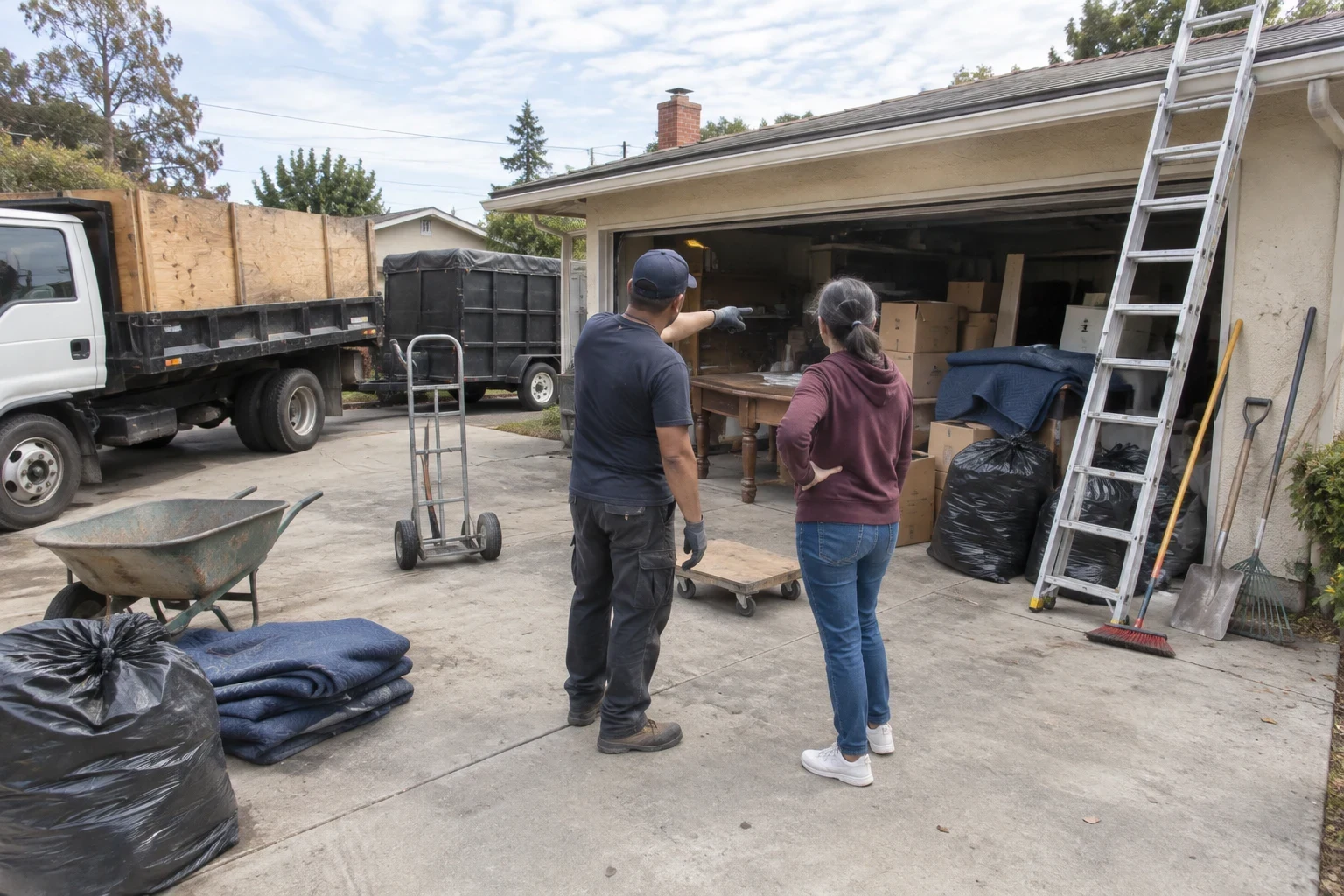
Once you reach us by phone, we visit and check the shed's size, material, contents and the route out. You have a written price in hand before anything is touched.
- 2
Power and hazard check
Any wiring has to be disconnected ahead of time, and we say so during the estimate. We also look for fuel, paint cans, pesticides and propane tanks, which we are not able to haul, and for older cement-board siding that may need testing first.
- 3
Clear it out, then take it down
Contents come out first so the crew has room to work safely, and then the shed comes apart from the roof down. A typical backyard shed is down and loaded in a few hours.
- 4
Load, sweep and final look
The last panel goes on the truck, the ground gets raked and the magnet makes its pass. Before we pull away, we look over the area together so you can confirm nothing was left behind.
What sets the price of a shed removal
We price a shed by looking at it in person, and you hear the number before anything comes down. Every shed gets a free, no-obligation estimate at the site. Four things do most of the work in setting that figure.
- Footprint and framing
- A resin kit unclips in a fraction of the time a stick-framed wood shed takes, especially one with a shingled roof and a plywood deck. Bigger floor area and heavier lumber add labor hours and fill more of the truck.
- How full it is
- Old mowers, stacked lumber, paint-free junk and a dead freezer all add weight and loading time. A shed that is already emptied comes in lower.
- The route to the truck
- A wide side gate and a short, level carry keep the job moving. Tight side yards, stairs or a long haul across the lot add trips and time.
- The base it sits on
- Skids, pier blocks and a gravel pad are part of a standard removal. A poured concrete slab is its own job, and if you want it broken out we can quote it as light demolition.
Common shed removal questions
- Does taking down a backyard shed require a permit?
- For a typical small storage shed, a demolition permit usually is not part of the picture. Bigger outbuildings, or ones fed by an electrical circuit, can be a different story, and the answer depends on the structure's size and the rules where you live. When something during the estimate looks like it could need a permit, we tell you then, so you can check with the city or county before we put the job on the calendar.
- There is wiring run out to my shed. Is that a problem?
- We can still remove the shed, but the circuit feeding it has to be disconnected and capped first. That is electrical work, so it belongs to an electrician rather than our crew. We point out the wiring during the estimate, which gives you time to have an electrician handle it before removal day.
- Does the concrete pad come out too?
- The standard job covers the shed, its floor and the base under it, such as skids, pier blocks or gravel. Breaking up and hauling a slab falls under light demolition. We can price both on the same visit if you want bare ground when we leave.
- Will the crew tear up my lawn?
- Panels and framing are carried out by hand along whatever path you pick, so no heavy machine rolls across the grass. The patch where the shed stood will be bare and yellowed, but it is cleared and ready for seed, pavers or a new project.
- Where do the shed materials end up?
- Steel siding and other clean metal get pulled aside for scrap recycling when we can. Painted or pressure-treated lumber, asphalt shingles and mixed debris go to the disposal facility that accepts them.
Ready to get that old shed out of the yard
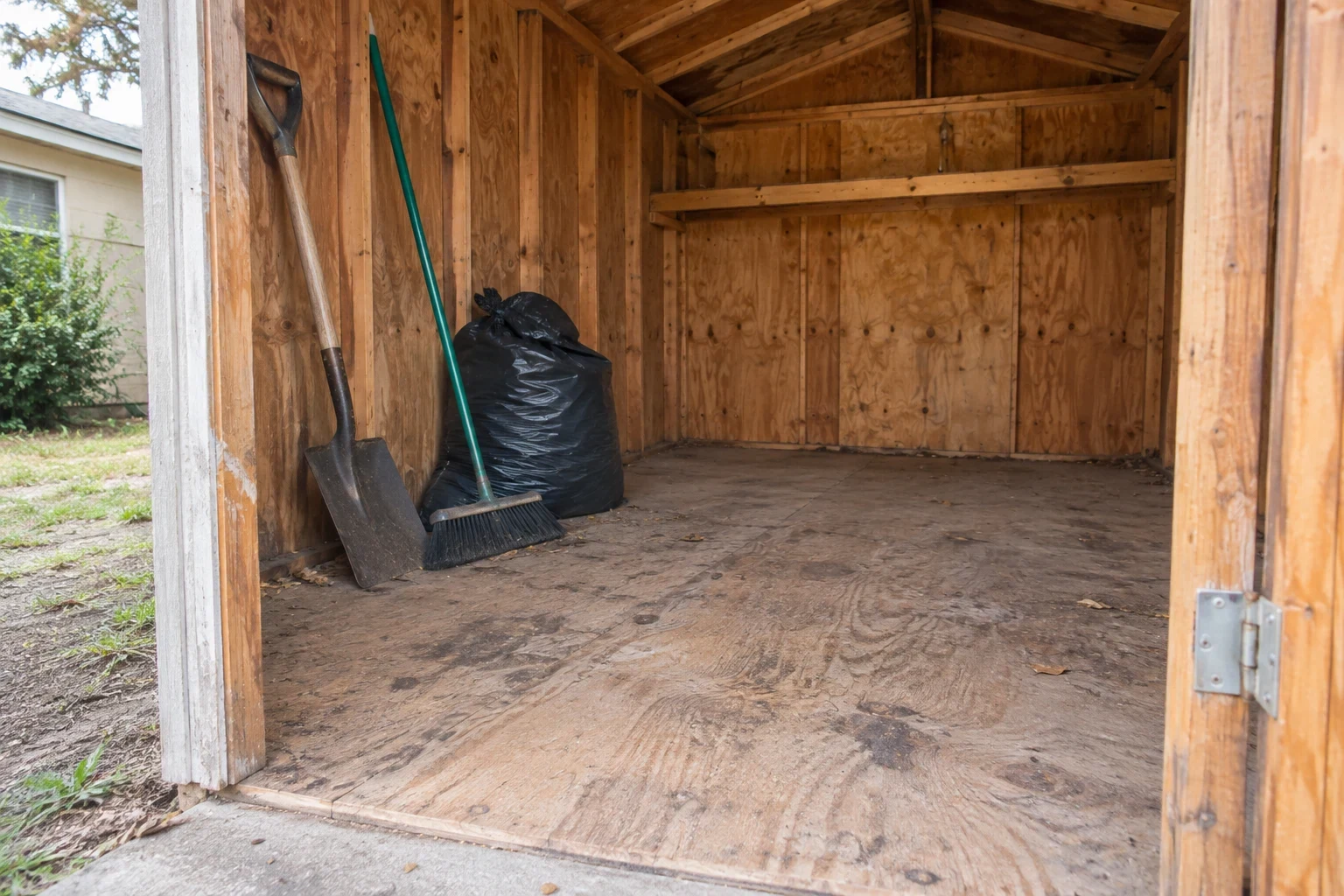
Tell us what kind of shed it is and what is inside, and we will set up a time to look at it. You will know the price before we lift a single panel.